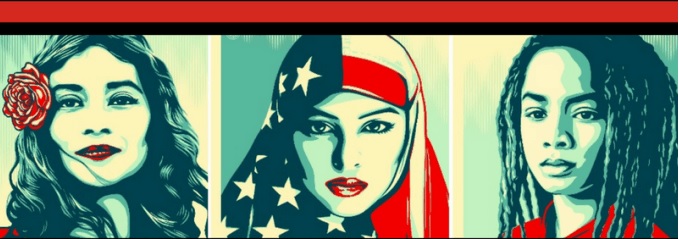
It’s no secret that feminism and the feminist cause have garnered much attention in recent times. Celebrities like Lena Dunham have seemingly led the cause to get young Hollywood to identify themselves as being feminist and attempted to publicly unpack what this actually means. To be fair her advocacy at this level has had a decent result with individual declarations flying around in spades on quite an ongoing basis.
However it seems that the concept of feminism seems to innately sideline and isolate the views of many who experience varying and complex compounding oppressions which intersect across race, gender, ethnicity, sexual orientation and disability. Women with disabilities have long identified that their experiences of discrimination based on their gender AND their disability have been placed in the ‘too hard’ pile as the cause has opted to frontline identities with less complex variations.
The lived experience of women with disabilities who associate themselves as contributors to the feminist movement has often been synonymous with being frozen out of the process. They’ve been provided a back seat as the challenges they face as women who also happen to have impairments deems their struggles not within the mainstream and thereby pushed to the side. Thinking about this more practically, feminist conferences for the most part have remained inaccessible in terms of physical infrastructure. If a woman with a mobility impairment in a wheelchair can’t even get in the front door to participate, how will her voice be heard, her concerns be taken into account and her cry for equality be put into action? Adding to this and moving beyond physical infrastructure, women with visual and hearing impairments have reported not being able to follow meetings nor participate in gatherings as transcripts in Braille have not been produced or sign language interpreters been provided.
It seems like in order to have messages around gender equality heard on the public forum those which are more palatable have taken precedence. Disability has long been treated with a sense of taboo and the sidelining of women with disabilities within the feminist movement seems to run parallel with this discriminatory thinking. Its approach in which the assumptions around femininity, and let’s be clear able bodied femininity, leave no place for the voices of those with disabilities. The thinking being that their plight, their cause can be taken up on a different stage, that of rights of all people with disabilities and that this forum is for the majority of women, those who are able bodied. Once again, this narrow but pervading view chooses to view discrimination through only one lens and dangerously abandons the other forms of identity leading to compounding discrimination. What all of this proves is that women’s oppression cannot be captured through an analysis of gender alone.
What seems to have plagued us in our fight for equality is a one size fits all mechanism which leaves out the varying and just as important voices that are at the fringes of society to begin with, let alone when this is compounded by the nature of their gender. Women are not actually a homogenous group we differ in ethnicity, background, religious belief and functional abilities. All of these elements as they intersect come to represent marginalisation in different forms. My experience of life as a young 1st generation, Australian woman of South Asian descent will vary vastly to that of say a Caucasian women in her 40’s, an indigenous woman with a disability in Latin America and that of a young, gay African American woman.
All of this comes to represent the term ‘intersectionality’ which was coined by American scholar Kimberle Crenshaw. The main crux of the idea is that multiple and compounding oppressions occur at once based on the different identities of those involved. One cannot separate racism with gendered oppression of a woman of colour as her experience of both are felt in an intersecting way. Breaking this down further this means that the discrimination she feels is worse than that of a Caucasian woman on account of her race and skin colour but different and perhaps less than an African American man based on her gender.
In the early days the launch of the 1st and 2nd waves of feminism were associated with the Suffragette struggle in Great Britain and the voices of able bodied Caucasian women in developed nations. The progress gained by the struggle towards univeralisation of voting rights and equal pay did have knock on effects for all women in these nations. However by no means did it assist in abolishing the discrimination of women based on their skin colour, sexual orientation or functional ability of which prevented them from accessing the gains made by early feminists.
What has also been highlighted in the debate about intersectionality within the feminist movement has been the sidelining of young millennial women’s voices. When the point of view being expressed takes on the form of a young millennial African American woman, gendered oppression in the form of multiple dimensions of identity is emphasized. The experience of Jessica Williams at a forum discussing women’s experiences in the modern day world highlights the level of misunderstanding amongst those who identify as being feminists. Williams, was ‘reminded’ to not place herself as a young, black woman into the ‘victimisation’ boat and was told to think about who she was ‘outside of being a black woman’. I mean the absurdity of this comment seems obvious, but perhaps to these 2 women, both over 50, one Caucasian and one Latina, they viewed a world in which it was possible (and somehow easy) to rid oneself of the 2 elements that form the core of this woman’s identity. Being a woman and being African American are her every day lived experience in which she cannot shed herself of these 2 things even if she were to try. In this sense, her gender and her race/ethnicity intersect to represent the way that she experiences life and discrimination. Unfortunately as has been the case for many women from minority backgrounds, this means that she needs to work twice as hard to access and achieve the things her Caucasian counterparts, man or woman, fulfill.
The permeating element of this entire piece aims to serve as a reminder that no one’s lived experience is the same. The way in which we as women are discriminated against is compounded by other elements of our identities that contribute to our marginalisation. Let’s all try to remember that not all oppression is experienced in the same way and therefore feminism cannot be inclusive without instersectionality.
Sx

 I blog for Change.