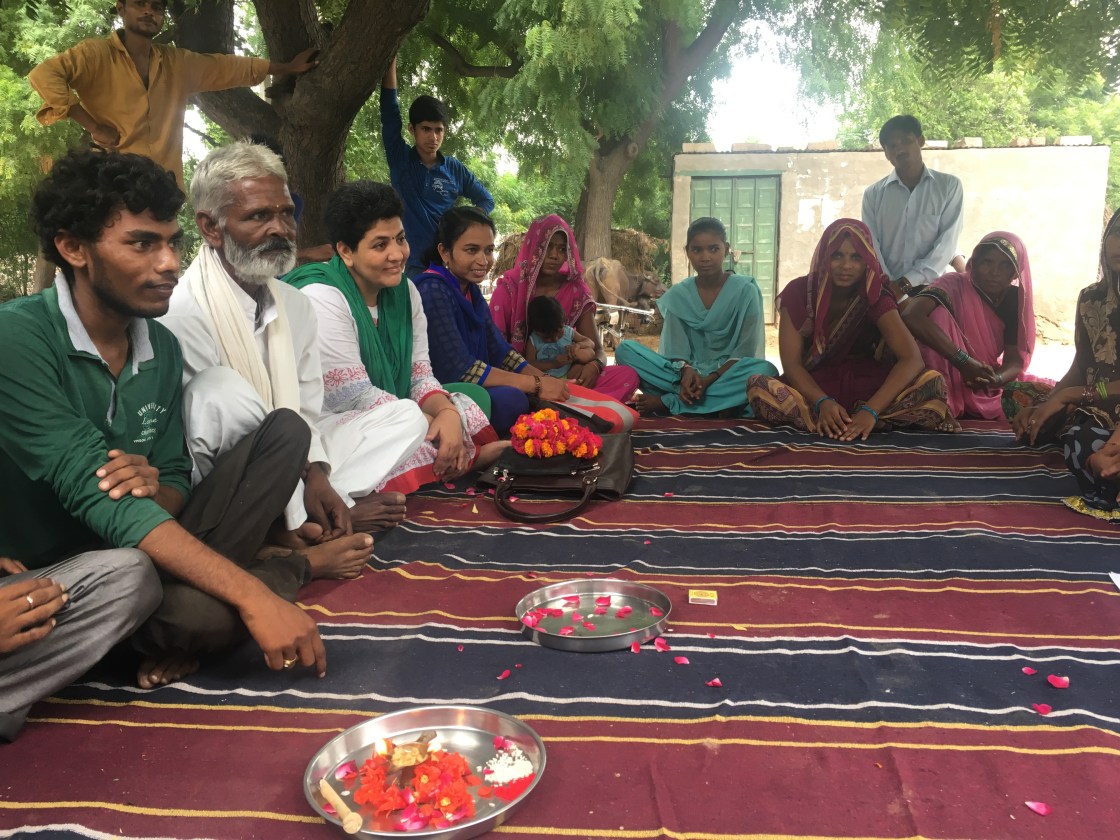


As the oppressive heat from the seasonal monsoon rains bore down on us we entered the back alleys of a remote village in Gorakhpur, Eastern Uttar Pradesh. We were there to visit the household of a participant of a livelihoods project being implemented within the region. Upon entry into the household it was explained that the main beneficiary was a young woman with intellectual disabilities who was in her mid 20’s. According to the community workers in this area and her family members, prior to the initial engagement of the project, this young woman used to be idle at home without having been able to pursue a formal education or informal pathways to vocational training in adulthood. As a result she used to run away from home quite frequently and inhibited signs of aggressive and violent behaviour most likely linked with frustrations around the inactivity of her day to day life.
As this geographical area is synonymous with agricultural activity with 70+% of the state’s workforce being engaged in some form of farming, this young lady, who we will refer to as Krishna*, was identified as a candidate for a small scale goatery business. The developmental thinking behind goat rearing lends to a viable source of income generation for rural populations with low cost input. The benefits being two to threefold, with the milk produced being able to be sold, as with the next of kin kids being put up for sale plus the additional possibility that once goats reach adulthood they can be sold for their meat.
Krishna started her business enterprise with just one goat and by the time we visited her, a year on her ventures had been so successful that she had expanded her trade to take on 18 goats. In addition to this, her vocational triumphs had provided her local Self Help Group with the assurity they needed to allow her family members to take out small scale loans and start other income generating activities such as a local petty shop to further support the household income.
While interacting with this tenacious young woman it was obvious that she took pride in her role as the caretaker to her 18 goats and had now become the highest source provider of income generation for her household’s survival. The intervention around providing her with an active livelihood had also had knock on effects in terms of resulting in greater social inclusion within her household and community due to the respect associated with her newfound vocation. According to her family, she has demonstrated skills which they were unaware she was capable of due to taboo, stigma and misunderstanding around her disability.
Sx
*Please note, the name Krishna has been used as a pseudonym in this instance to protect the identity of the young woman in this piece.
*Images courtesy of CBM Australia
 I blog for Change.