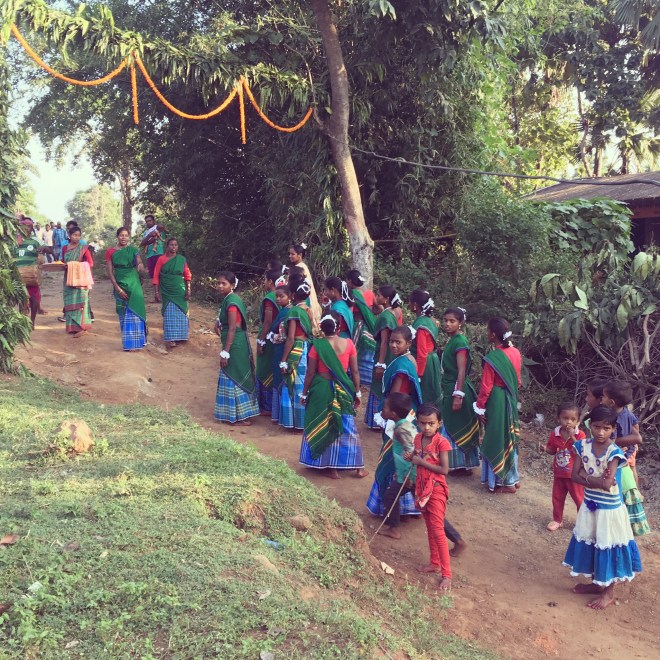
My last monitoring trip for 2017 took me to the strikingly beautiful countryside of Jharkhand. As we pulled up into the Palma village a series of wonderfully bright colours and invigorating sounds hit my senses all at once. We were being welcomed into this community through a traditional ceremonial tribal greeting. As we wandered along the captivating drumbeat and achingly soulful voices of the villagers provided a spectacular backdrop to our arrival. It was obvious that underlying this entire scene was a deep seated sense of pride that this community possessed as they shared their way of life and culture so openly with us.
Each step that we took were greeted by women who told tales of the partner organisation we were working with, Chotanagpur Sanskritik Sangh (CSS) through their women’s wing of MISSI having empowered them and assisted in the subsequent changing of their lives for the better. MISSI, a Nagpuri word meaning Sister is a grassroots network which is made up of women including women with disabilities from the Chotanagpur Plateau. The entity which began in 1995 has now grown to encompass a membership of in excess of 6000 women.
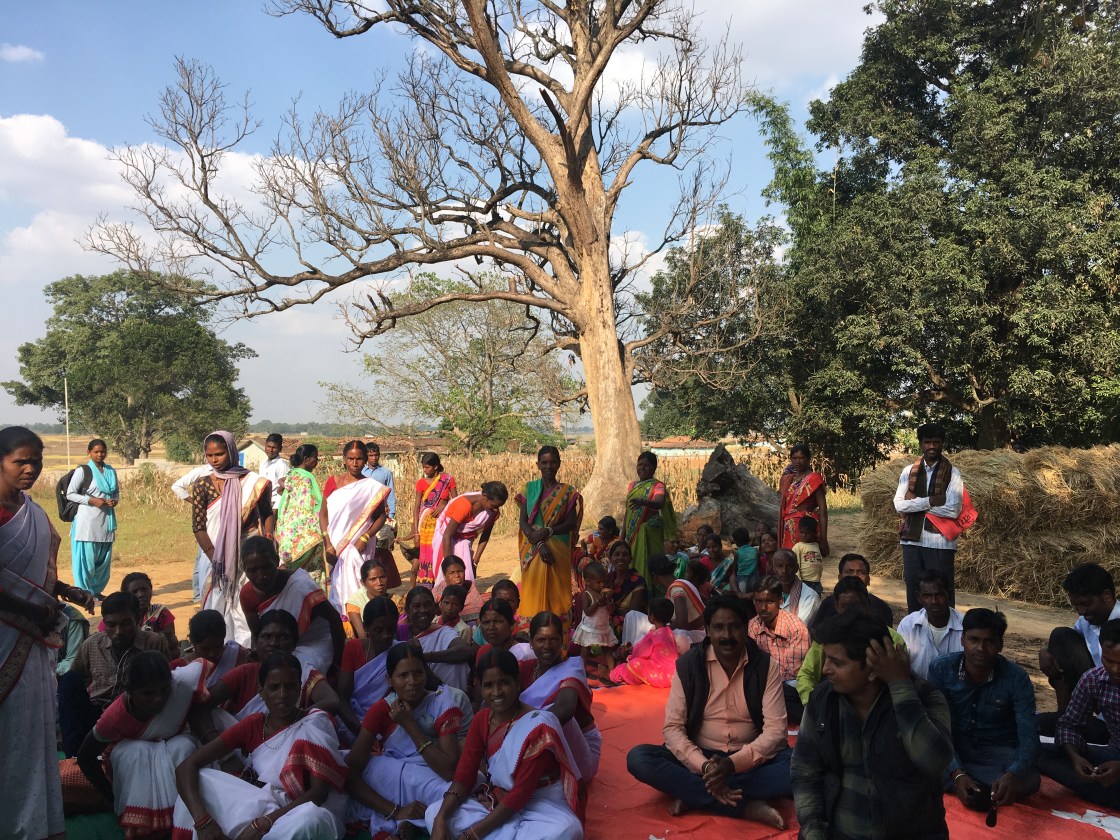
As we continued to make our way through the surrounding villages the individual stories of improved agency and voice through MISSI’s investment became more and more apparent. Women proudly told of their life stories in which prior to becoming part of the movement, they were house bound but yet dreamed of opportunities to better their lives and those of their family members. When MISSI representatives knocked at their doors these opportunities presented themselves and these women were quick to grasp them going on to achieve some truly wonderful things.
One woman, who is now an accredited Anganwadi worker, a Government funded pre-primary teacher spoke of the element of sisterhood which forms the backbone of how MISSI operates. She stated that after being identified by MISSI and receiving vocational training she felt empowered to not only speaking up within her household, but felt confident enough to raise grievances facing women in her community directly to local government officials.
The women also relayed how membership of the group acted as a social security network in which women contributed small amounts of money, rice and crops to a centralised fund which could be accessed in times of need. They also spoke of collectively coming together when incidences of violence plagued women in their villages, in which they would they go to judicial officials and the police to report these crimes as a group. The notion of strength in numbers is utterly personified through this model.
It was such an honour to simply be present as these women spoke of how their lives had changed through this impressive network of sisterhood. They spoke openly, confidently and proudly against a backdrop of patriarchy and control in which women are not afforded with any form of voice or agency. As we were leaving the village it was professed that as a result of these incredibly resilient and empowered women, child marriage had been eliminated from their village.
This community represented the truest and most successful form of sustainable development in which providing women with the tools to improve their own lives had significantly contributed to the betterment of the society surrounding them. What an astonishing story of change this village represented.
Sx
 I blog for Change.