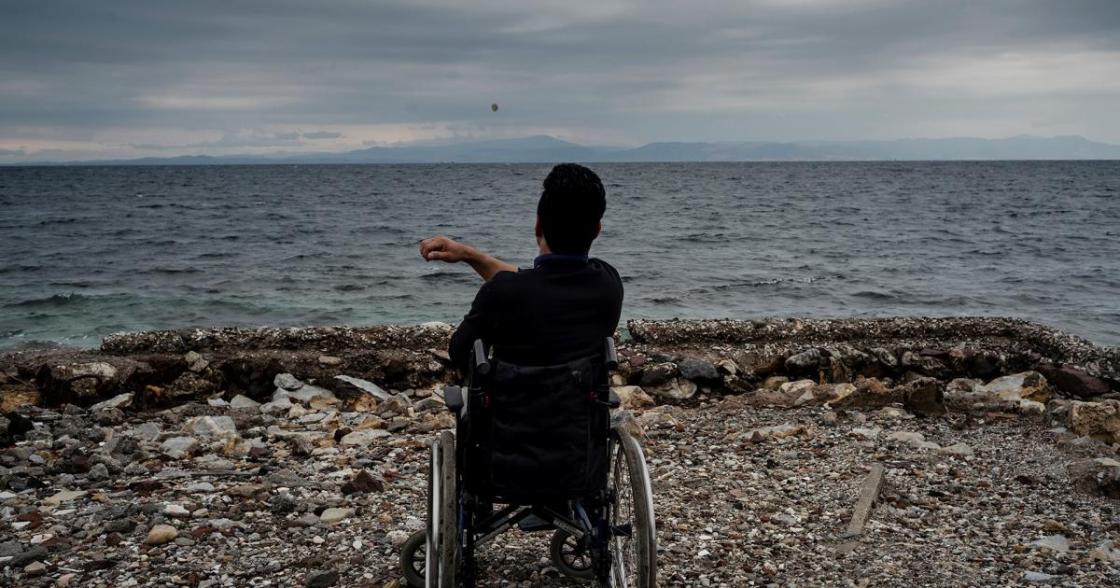
When I speak to people about my vocation and my involvement in the disability sector there seems to be an overwhelming reaction in which people invoke the ‘aawwwww’ or ‘how sad’ card in response. The truly sad fact is that connotations about disability and what it means to be a person with disability allude to the seemingly inevitable concept of sympathy. It’s a notion of thinking that we in the development sector know all too well which is deeply rooted in the welfare approach. This attitude purports that the so called beneficiaries of services are not thought of in terms of their inherent capabilities, but instead as passive recipients with nothing to say about their lives or anything to offer to better them.
What people often forget is that people with disabilities do not need us to decide what is right for them or to provide all of the means to live their lives for them either. Every human being has intrinsic agency and thus should be at the centre of their own development. One of the most powerful statements I have seen composed by a person with a disability states “I do not believe I need to be fixed, because I am not broken. The world may create barriers to my full participation sometimes, but I am a whole person”*. Basically stating that ‘like any other community, the disability community deserves the agency’ and voice to speak for themselves through their own lived experiences.
I suppose it’s within the context of discomfort in which assumptions around people with disabilities are mainly made. It seems unfathomable that I need to craft a piece on the need for inclusive consultation and not making decisions about someone else’s life without their input. However, for people with disabilities and especially women with disabilities, this is their everyday lived experience.
A common misconception associates women with disabilities and asexuality. This has led to some serious gaps in universal access to sex education and lack of distribution of contraception communities of women with disabilities. The medical approach towards people with disabilities reflects a blanket assumption that those with disabilities need to be fixed or cured prior to their full and active participation within their communities and broader spheres of influence. But FYI, one is not a precursor to the other and I cannot stress this enough.
I’ve often balked when I have heard stories of people with disabilities only being offered health related services and left out of livelihoods or education opportunities within mainstream development programs. I presume the thinking being that people with disabilities wouldn’t be interested in vocational training or income generation activities due to the sole nature of their disability. Yet another example of a person’s disability not actually being the biggest barrier to a better quality of life. But instead disabling elements of society around them lead to greater exclusion due to misconceptions associated with stigma, taboo and sheer ignorance.
The truth is people with disabilities are inherently capable of wielding autonomy towards decision making for their own lives. What we all need to keep in mind is that what is right for my own life does not universally apply to others. So in order to ensure holistic inclusion and mainstreaming of this into wider society we need to ditch the condescending ableist mindset that has been wielded up to this point. Agency is not just available to those who society deems are worthy based on whether or not they have a disability. It is universal.
Sx
 I blog for Change.