




This trip, like most others had started with a robust tugging of my heartstrings. For me this time around, it had been at Bangalore airport when I lined up to check in for my flight across the Palk Strait. I fleetingly looked up to the signage and saw my flight number over the top of my destination ‘Colombo’ spelled out in large letters. My eyes instinctively filled with tears threatening to spill over and run down my face. In that moment I had to quietly laugh at myself, I mean crying over simply seeing these letters in any other circumstance would seem utterly absurd. But for me, in this context it seemed oh so justifiable.
Colombo as a city remains an old and familiar friend. One in which I don’t speak to every day, but when we do come face to face it feels like no time has passed and we’ve never left each other’s lives. Seeing my friends and family is always such an emotion fuelled experience as for an instant, I get to live out an existence, a realm of life in which my parents and I never left the country all those years ago. I am perennially filled with utter joy during my time in such a gutsy and exciting city and this trip was no different. But what was driving me the most at the time was my child like anticipation of experiencing a city which had always been just a touch out of my reach; that of Jaffna.
Driving on the A9 Freeway itself was something of an unfamiliar commodity to me as I recalled that up until recently, this stretch of road was not one which people embarked on with ease. Post 2009, once the conflict had ended the entire area was first swept for and cleared of landmines before being deemed safe for access by the public.
As we pulled up to Elephant Pass I began to understand the strategic importance of this point and the many battles which were fought over it came into clarity. Surrounded by water this tiny strip represents the only land access point to the Jaffna Peninsula and is thus aptly referred to as the ‘Gateway to Jaffna’.
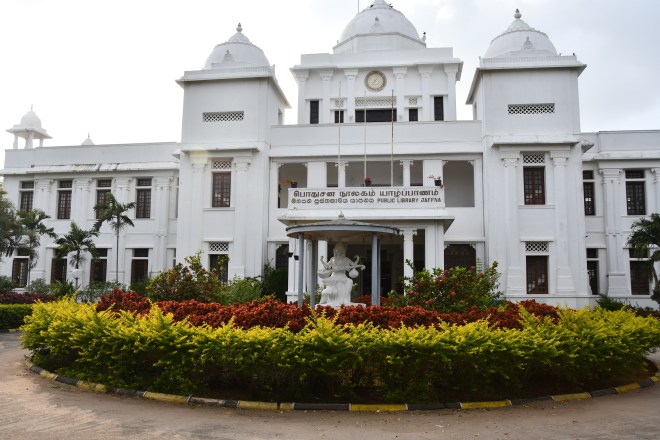
Entering the city I admitted to not knowing very much about its identity or infrastructure, however the one story that I had heard was about the symbolic significance of the Jaffna Public Library. The library itself was built during the time of the British in 1933. But that was not what it was most known for, instead it was the 1981 targeted burning of the building which it became synonymous with. What resulted was the loss on masse of volumes of historic Tamil language manuscripts and text. It has been reported that this single event was one of the most demoralising moments of the entire conflict due to the blow it inflicted to the concept of sustenance of Tamil culture.
Emotionally for me this visit was one of the most sombre. It seemed beyond justification or understanding how a structure representing the pursuit of knowledge and peace could be targeted in such a destructive way. The attack was not only a blow to Tamil culture but also dealt an equally sad and divisive hit to the purported identity of those who committed the act of vandalism. I felt a pronounced sense of shame that this act had been committed in the name of patriotism or whatever warped justification the arsonists wielded at the time.
In spite of these emotional scars that 30+ years of warfare had inflicted, I recalled feeling a constant sense of imbedded resilience and pride among the people of the city. I couldn’t imagine the horrors they had seen or how they had kept going with their lives under a period of such uncertainty. And yet here they were still toiling, still struggling away for a better future.
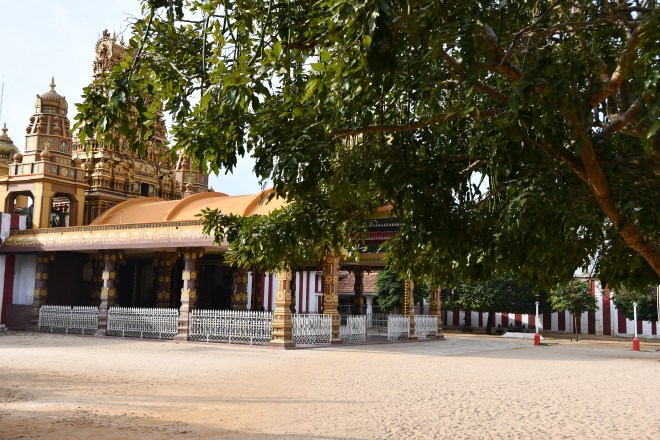
The most poignant imagery through all of this came during a visit to the Keerimalai hot springs; a sacred well known site amongst locals for its healing properties. I spent a fair while walking around and simply taking in the sights of this place. After some time a fleeting glimpse of a sea of saffron caught my eye from just beyond my sight range. To my surprise, once I focused my gaze further I realised that what was in front of me was a group of young Buddhist monks. If you know anything about the conflict in Sri Lanka you would know that it was drawn on ethnic lines but that religion played a similarly divisive role. Jaffna and other previously LTTE controlled areas were predominantly Hindu, the main religion practiced amongst the Tamil population. Hence one would understand how the sight of an entire group of Buddhist monks respectfully paying homage to a Hindu holy site was something out of the ordinary.
I wanted to understand the motivation for this situation further and upon speaking to one of the adults in the group came to learn that these youngsters had been intentionally brought to the North, for the first time in their lives. They were visiting all religious sites in the area across both the Hindu and Buddhist spectrum in an attempt to be exposed to diversity.
As I quietly watched these monks I remember thinking that at the very least this step was a small but intentional one on the way to normalising the concept of multiplicity representing the different communities of my country. For so long we as Sri Lankans have fallen into the trap of focusing on our differences, the things that supposedly divide us in order to call ourselves patriots. But what my visit to Jaffna has taught me is that surely patriotism represents a commitment and safeguarding to be universally wielded to protect all of those who inhabit our lands.
So to Jaffna and it’s incredibly irrepressible and buoyant people.. you represent the fight, drive and sense of community in which Sri Lankan identity is built on. You are my brethren, my compatriots who made me feel at home even on soil in which my feet had never before touched.
Thank you for the spirit, hospitality and kindness you showed me and my family during our time with you.
With love, until next time.
Sx
 I blog for Change.