I landed in Addis Ababa, Ethiopia’s capital on a lazy Sunday afternoon. I had embarked on this trip with excitement but also some trepidation. After working in the Indian context for almost 4 years it was difficult to imagine anything else. I was nervous that being new to the environment that I wouldn’t have anything to offer which would mean that I couldn’t do my job properly. But as we drove through the streets of Addis I was humbled by the sheer beauty of the landscape. The city itself is draped in front of the most breath taking and luscious green mountains which are highlighted by the rolling clouds above them. As I continued to gaze into the skyline my doubts seemed to just wash away.
For the purposes of my visit, I was here to monitor one of our Community Based Inclusive Development (CBID) projects. This project in particular works on reducing stigma and discrimination of people with disabilities and assisting them to meet their health, rehabilitation and educational needs. In order to promote people with disabilities being responsible for empowering themselves and demanding their rights to their local government, the project also focuses on creating and supporting Disabled Peoples Organisations (DPOs). These groups create an opportunity for collective bargaining power in which a united voice is elevated towards ending discrimination for people with disabilities and improving their quality of life.
During the first day of my community visit I attended a discussion in which there were close to 10 people present. At this time I noticed that the room was dominated by men and only one of these was a woman. I watched as she sat quietly for the majority of the discussion. However when it was her turn to speak she opened her mouth and spoke with such assertive clarity. She explained that her daughter was born with multiple disabilities. At the time she was shamed for having brought a child with a disability into the world and blamed for passing down a curse. It was identified to me later that any child with an impairment that is born into a household is always seen as being the mothers fault. It some cases these women face destitution as their husbands leave them and their families abandon them forcing to care for their child on their own.
As I looked into this woman’s eyes she spoke of having no hope, for years she didn’t think it was possible for her child to have any kind of independence or quality of life. She went on to then tell the story of how a local partnering NGO in this area raised her awareness of the possibilities for her child. With this knowledge in tow she successfully lobbied for provision of a wheelchair for her daughter. The local partner has also been able to assist this family with delivering home based rehabilitation teaching her daughter daily living skills aiming to improve her functionality and therefore her independence.
When the meeting was over each participating community member greeted us on their way out. I waited to shake the hand of this strong, resilient lady who had just shared her story. In that moment, as she took my hand I was reminded of the element of sisterhood that is shared by women throughout the world. The empathy we display and the notion of truly being affected by someone else’s story came to the forefront immediately. She shook my hand and then pulled me in for deep embrace. I remember thinking that this wasn’t about gratitude, it was about pride and an enlivened hope that was built into her after seeing the possibilities on offer for her daughter.
The effect that this intervention had on herself also was one which was truly breathtaking. Her entire outlook had changed through simply being aware that her daughter was not the burden that people had continued to tell her she was. She began to understand that her child had a right to be in this world and was capable of things beyond what historical taboo dictated. She has since become a champion for rights of people with disabilities. She is seen as a role model to other parents of children with disabilities. Her confidence and commitment are on show as she now feels as if she is equipped with the one thing that has the potential to change lives, that of knowledge.
Sx
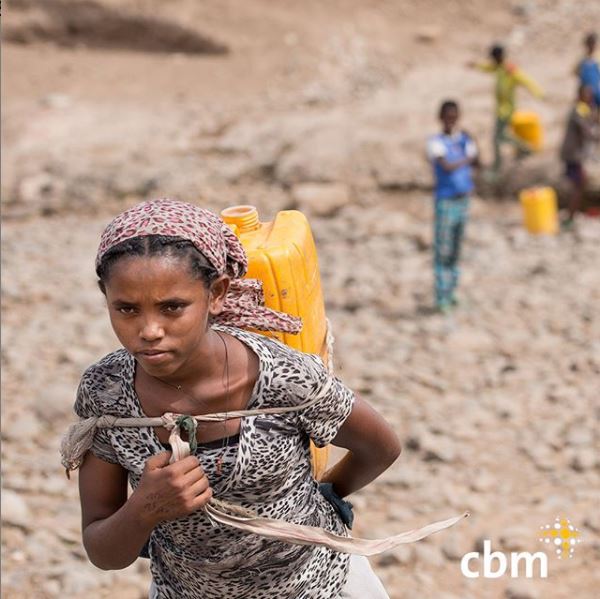
Featured image courtesy of CBM Australia.
 I blog for Change.